Summary
Tinazzi is a winery with operations in Veneto and Puglia. The Puglia chapter started in 2000, when Gian Andrea Tinazzi — now 76 — bought the first five hectares near Carosino after seeing potential in Salento wine that others were ignoring. Back then Primitivo grapes cost 15 to 18 cents a kilogram; they now fetch around €1.40. The estate runs to 35 hectares across Carosino and San Giorgio Ionico, and until 2021 production had reached one million bottles a year, not counting bulk. The piece is an extended interview with Tinazzi. The centrepiece project is Longevitis, launched in 2023: a method using selected yeasts and the re-utilisation of grape skins to increase natural antioxidants extracted from the seeds of Vitis vinifera grapes — Primitivo in Puglia, Corvina in Veneto — to slow oxidation and extend bottle life from what would otherwise be pressing waste.
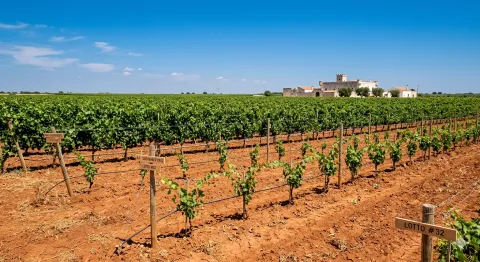
The PIWI part of the story is smaller than the title suggests. After running similar trials in Veneto, Tinazzi planted 2,500 square metres of white and red PIWI vines — Souvignier Gris and Prior among them — in Carosino with backing from the regional government. The project is in a three-year experimental phase before any wines can be marketed. The interview also takes in a market pivot toward rosés and whites, a firm refusal to lower alcohol levels on the grounds that it would denature Primitivo, and the use of ad-hoc blends to soften the wine for shifting tastes. Exports run at around 85% across the USA, Russia, Japan, Vietnam, and broader Asian markets. A masseria at the Feudo Croce estate is being developed as a heritage destination: renovation uncovered remains of ancient civilisations including ceramics, now being curated with the Superintendency for display within the structure. The company also supports dolphin conservation in the Gulf of Taranto through the Jonian Dolphin Conservation association.
Our take
The title puts PIWI front and centre, but the body gives it one paragraph. The trial plot — 2,500 square metres, less than 1% of Tinazzi's Puglia estate — is a toe in the water, not a commitment. Three years of trials have a timetable, but no vinification goal is stated and no variety decision looks final. Strip that away and this is a company profile built entirely on what the owner chose to say about himself: Longevitis goes unverified, the dolphin work and the archaeological project both appear as reputation garnish, and nothing in the piece would make Tinazzi uncomfortable.
About the author
Serena Leo writes for Virtù Quotidiane. Nothing is known about her beyond her author page on the site. Reading the piece, she gives Tinazzi the floor without challenge: figures are not verified, claims go unchecked, and no outside voice appears at any point. It reads as a Q&A tidied up for publication rather than a reported piece.
About the publisher
Virtù Quotidiane is an Italian digital daily covering food, wine, tourism, and territory, registered with the Tribunal of L'Aquila in 2017 (ROC n.36287), with Marco Signori as editor. It covers the sector with genuine enthusiasm, and producers in its pages tend to come out looking good. You will not find much pushback here, or much that the people it covers would find uncomfortable.