What is the origin?
The paperwork is, to put it charitably, a mess. The Vitis International Variety Catalogue — the primary authority on grapevine genealogy — records Isaura as originating in Hungary, crossed in 1959 at the KRF Research Station for Viticulture and Enology at what was then the University of Horticulture and Food Industry, now Corvinus University of Budapest, by breeders József Csizmazia and László Bereznai. The pedigree is unambiguous: Eger 2 × Muscat Ottonel, with SSR marker data confirmed. No resistance loci are formally documented in the VIVC entry. No year of registration or protection is recorded. The variety is not listed in the European Common Catalogue. And despite its hybrid pedigree, it is formally classified under Vitis vinifera Linné subsp. sativa — make of that what you will.
The wein.plus encyclopaedia, meanwhile, tells an entirely different story — attributing the same cross to Erhart Tutzer (1945–2024) and his Innovitis Vine Breeding Institute at the Plonerhof winery in Marling, South Tyrol. Tutzer was a genuine PIWI pioneer: he founded a vine nursery in Bolzano in 1963, began resistance breeding in 2000, developed partnerships with research institutes across Italy and abroad, and ran three trial vineyards in South Tyrol with over sixty resistant varieties. He won the prize for the best Italian PIWI white at the Edmund Mach Foundation competition multiple times. Aromera — the name wein.plus uses for Isaura — is listed as one of the results of his work.
The contradiction is not resolved anywhere in the publicly available literature, and it may be deeper than it first appears. The VIVC, maintained by the Julius Kühn-Institut and the standard reference for pedigree data, is unambiguous about the Hungarian origin. Whether Tutzer independently recreated the cross, acted in collaboration with Hungary, or is simply credited in error is unknown. There is a further wrinkle: Aromera is also documented elsewhere as a distinct Swiss-bred variety with different parentage entirely, which raises the possibility that the whole South Tyrolean attribution rests on a misidentification rather than a genuine parallel breeding claim. What the VIVC does record — under the synonym list — are the breeding codes EC 52, ECS 52, and Egri Csillagok 52. That last designation means "Star of Eger," the exact naming convention of the Csizmazia and Bereznai programme, the same series that produced Bianca (ECS 40), Nero, and a dozen other varieties from Eger 2 crosses. Whether those codes refer to the same selection or different clones from the same cross is not clarified. The VIVC entry contains no year of protection and no European Catalogue registration, which confirms that wherever Isaura came from, it has not cleared the formal hurdles that most actively promoted PIWI varieties clear on their way to commercial life.
The parentage itself is well understood, even if little else is. Eger 2 has been shown by DNA analysis to be equivalent to Villard Blanc (Seyve-Villard 12-375) and carries genes from Vitis berlandieri, Vitis rupestris, and Vitis vinifera. It is a hybrid bridge variety, the same Seibel-lineage material that runs underneath a wide range of central European PIWI crosses. Muscat Ottonel is pure Vitis vinifera, a Chasselas × Muscat d'Eisenstadt cross of French origin, and it is responsible for whatever aromatic grace the variety carries. What the combination actually produces in terms of vinifera percentage has not been published. Given a crossing year of 1959, nobody was using marker-assisted selection; classical crossing is the only realistic assumption.
What is it resistant to?
The wein.plus entry is blunt: tolerant of both types of mildew — powdery and downy — and of Botrytis cinerea. In PIWI literature, resistance and tolerance are not interchangeable terms, and the degree of protection here and the specific genes involved are not documented. The VIVC records no resistance loci for Isaura, which puts it in the same poorly-characterised cohort as many older PIWI varieties bred before molecular marker tools became standard practice. Villard Blanc is known to carry Rpv loci — including Rpv1 and Rpv3 — in other references, but whether those have been specifically mapped in Isaura is not in the published record.
The botrytis tolerance is the commercially interesting claim. Many PIWI whites that come from aromatic, muscat-influenced parentage are loose-clustered and relatively open — which matters for grey rot under autumn humidity. Whether Isaura's cluster architecture contributes to its botrytis tolerance or whether it is primarily genetic is undocumented. The one documented vulnerability is coulure — the variety is described as slightly susceptible — though without any reference point for comparison, the practical weight of that note is hard to judge.
Beyond that, the information a grower actually needs simply isn't there. Copper sensitivity, spray programme comparisons, phylloxera response, leafhopper behaviour, yield consistency — none of it has made it into the published record. For a variety with a crossing date of 1959, that gap is not shocking. It is, however, a real obstacle for anyone trying to decide whether to plant it.
How does it adapt to climate and what is its ripening profile?
Late-ripening. That is, in practice, the most important climatic fact about Isaura, and the one thing all sources agree on. A late-ripening muscat-type variety is not a neutral statement — it is a site requirement, a climate filter, and a risk assessment rolled into one. The variety is not suited to cool or short-season sites.
The Plonerhof context is suggestive even if not directly transferable. The Tutzer estate in Marling sits on steep, south-facing slopes above Merano, with sandy loam over granite and gneiss, vine rows planted in the fall line to maximise thermal airflow. That is a warm-site, late-ripening environment — consistent with what a late-ripening muscat variety needs. Whether Isaura performs equally well on flatter or cooler sites has not been documented.
How does it grow in the vineyard?
Beyond the site requirements implied by late ripening, the record runs out fast. No soil preference, no rootstock data, no yield figures, no pruning recommendations beyond what can be inferred from standard practice. How consistently it crops, and what a grower might realistically expect in terms of cluster weight and fertility, is simply unknown. The susceptibility to coulure is the only specific agronomic note available, and even that is described as slight rather than quantified.
How does the wine taste?
The wine is the reason anyone would bother. Spicy, acidic, with a fine muscat tone and rose aromas: that is the consensus descriptor, and it places Isaura in a distinct stylistic lane — closer to Gewürztraminer than to Muscat Ottonel in character, though both parents leave their mark. The acidity is noted as pronounced, which is useful. Muscat varieties at warm sites often trade acidity for sugar; an aromatic PIWI white that retains a tart backbone is genuinely interesting.
Nothing further is documented. No must analysis. No alcohol range. No ageing data. No published comparison with other aromatic PIWI whites. No vinification notes. Whether the variety performs better as a dry still wine, an off-dry, or a late-harvest style is a question the literature does not answer. The Gewürztraminer comparison is evocative but unverified. For a variety bred in 1959 and held up as a PIWI success by Tutzer's Innovitis programme, the absence of published tasting data and microvinification results is the loudest silence in the whole record.
What is the distribution, regulatory status and market development?
Isaura is not in the European Common Catalogue, and no national registration has been confirmed in Hungary, Italy, or anywhere else. The VIVC records no year of registration and no plant breeders' rights. No planting area figures exist for any country, and while Kym Anderson's 2016 statistics showed zero reported stocks under both names, those figures predate the surge of interest in PIWI varieties and say nothing about small experimental or private plantings that go unreported. The Plonerhof winery in Marling grows it — or grew it under Erhart Tutzer's direction — as part of a broader PIWI trial portfolio, though whether it has ever appeared as a bulk wine, a blend component, or only as an internal trial lot is not documented. No other commercial producers have been identified. The variety appears in VIVC records held at five institutions: two German gene banks, two Hungarian collections, and one American collection. It is alive in the ampelographic record. In the market, it does not exist.
The regulatory situation is less complicated than it might seem, and more frustrating. Without national registration in at least one EU member state, commercial planting for wine production is either in a legal grey area or simply not permitted, depending on which country you are in. Isaura is not an EU-authorised variety. That is not automatically fatal — experimental planting and derogations exist, and national wine-law frameworks can sometimes accommodate varieties outside the Common Catalogue — but it is a hard ceiling on any commercial ambition until someone completes the registration process.
Which estates and wines stand out?
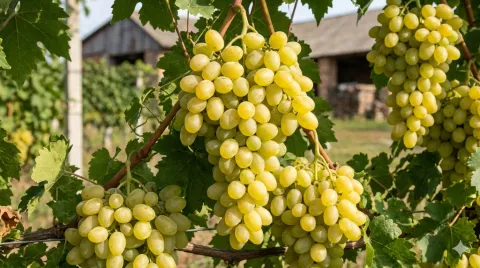
No formal ampelographic description of Isaura has ever been published — no leaf shape, bunch morphology, berry size, or colour profile, despite the variety sitting in five gene bank collections. The Aromera naming question is genuinely unresolved: synonym, breeding code, marketing name, or misidentification with a separately documented Swiss variety — nobody has sorted it out in print. Whether Isaura is authorised anywhere for wine production, table grapes, or breeding material, as opposed to simply being preserved experimentally, is equally unclear. For a variety anyone might want to plant, breed with, or commercialise, the paperwork is, to put it charitably, still a mess.
What is the future outlook?
Tutzer died in a tractor accident in April 2024 at the age of 78. He was the only identifiable advocate driving the variety's profile under the Aromera name. Whether Innovitis or the Plonerhof estate continues to develop the variety's commercial potential under new management is not publicly known. The Hungarian origin line — Csizmazia, Bereznai, the Eger research station — belongs to a programme whose active participants are long out of the picture.
What Isaura has going for it is real: a documented field tolerance profile, aromatic Gewürztraminer-adjacent character, acidity, and the fact that it delivers muscat genetics through a Vitis interspecific hybrid parent rather than through pure vinifera — a combination that remains uncommon in the current PIWI white landscape, dominated as it is by neutral or mildly fruity styles. That is an unusual profile. Whether anyone with the resources and the regulatory patience to run it through national registration and commercial launch will act on it is another question entirely. The variety has been waiting since 1959. It can probably wait a bit longer.