Summary
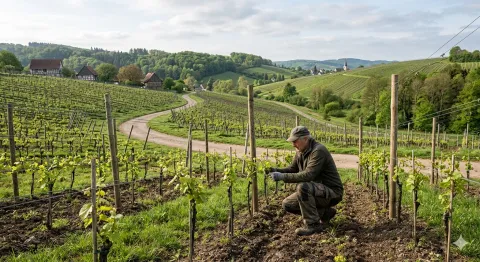
Germany's Piwi vines — the fungus-resistant hybrids that growers have been cautiously moving toward for the better part of two decades — had a good year in 2025. Planted area grew by around 10 percent to approximately 4,000 hectares, according to figures from the Deutsches Weininstitut, though no specific report or date is cited in the original so these should be treated as preliminary. That puts Piwi at about 4 percent of Germany's total vineyard surface. Not enormous. But the wider context gives the number more weight: overall vineyard area shrank that year, with red varieties falling the hardest.
The variety leading the charge is Souvignier Gris. Bred in 1983 at the Staatliches Weinbauinstitut Freiburg, it only received approval for quality wine production in 2014 — the gap reflects how long Germany's variety registration process takes, something the original article gestures at without ever really explaining. It added 170 hectares last year, apparently more than any other single variety in the country, though no comparative data is given. DWI spokesperson Ernst Büscher is on record in support. Two other claims in the article deserve a raised eyebrow: that Piwi wines now taste indistinguishable from conventional ones — asserted without a single producer, critic, or tasting to back it up — and that France is buying German Piwi plant material in growing volumes, which may well be true but comes with no figures attached. Both deserve more than they get here.
Our take
The facts in this piece are interesting. The questions it does not ask are more interesting. Who are the growers actually making the switch, and what pushed them? What do buyers think of the wines — not in theory, but on a price list? The taste claim especially — that Piwi wines are now indistinguishable from conventional ones — is the kind of assertion that either changes minds or collapses under scrutiny, and the article has no interest in finding out which. The 30-year journey of Souvignier Gris from breeding to approval is mentioned in passing, when it is actually the most telling detail in the whole piece. It says something real about the pace of this industry. Instead the article closes with a nudge to investors. That tells you who it was written for.
About the author
No byline. Eulerpool News produces thousands of items a day through a largely automated process, and this reads accordingly — accurate enough, quick, anonymous. Not really trying to be anything more than that, which is its own kind of honesty.
About the publisher
Eulerpool is a financial data platform, German in operation, Swiss in registration. The news side exists to move information to investors fast — more than 5,000 items daily. Speed is the product. This piece fits: a real agricultural development, reframed as a sector signal, published and moved on from. It landed on klamm.de, a German community portal aggregating content since 1999. Neither outlet has any particular reason to dig deeper into the viticulture, and neither does.