Summary
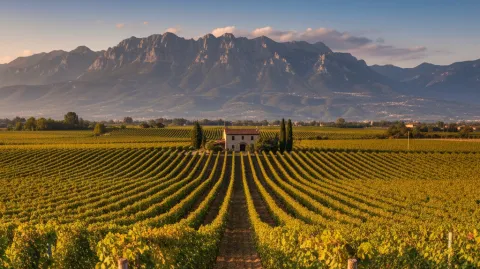
In the Valle Santa Felicità near Romano d’Ezzelino, Ca’ da Roman positions itself as a laboratory for future-oriented viticulture. The estate works exclusively with Piwi grapes—an acronym of the German “Pilzwiderstandsfähig,” meaning “fungus-resistant.” These varieties drastically reduce the use of chemical crop protection. With 18 hectares, nearly seven of which are planted, and a clear architectural reference to Roman centuriation, the company links symbolism to strategy. According to sector data, the Piwi surface area in Italy is steadily growing, with Veneto leading the way. Ca’ da Roman claims 40% lower CO₂ emissions and 70% lower water consumption. The tasting notes show a broad spectrum: from Metodo Classico to orange wine and alcohol-free spumante. The common thread is purity, tension and structural precision. Here, Piwi evolves from an experimental niche into a gastronomically relevant alternative.
Our take
The article positions Piwi as revolutionary, but nuance is partly lacking. The environmental claims are convincing, yet require independent long-term verification. Of interest is the shift from “sustainable” as a marketing term to measurable parameters. Ca’ da Roman’s greatest merit, however, lies in its aesthetic proof: quality as the legitimation of innovation.
About the author
Giovanna Romeo is an Italian wine journalist specialized in oenology and terroir reporting. Her style combines lyrical observation with technical precision. Criticism remains limited; her pieces sometimes lean toward promotional framing.
About the publisher
Quotidiano.net is an Italian news platform that bundles regional newspapers, including QN Il Resto del Carlino and La Nazione. The medium balances between general news coverage and lifestyle journalism. Wine articles are situated within the culture section and combine information with audience-oriented promotion.