Image
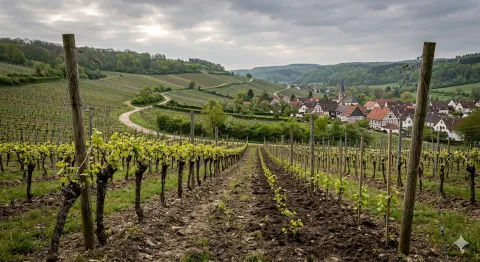
New vines, shrinking vineyard.
Article title
Robuste Rebsorten legen auf niedrigem Niveau zu
Link to article
Date of publication
Summary
Germany's Piwi vines — Pilzwiderstandsfähige Rebsorten in full, meaning fungus-resistant varieties — had a good 2025. According to the Deutsches Weininstitut, planted area grew 10 percent to around 4,000 hectares, now sitting at roughly 4 percent of the national total, up from 3.5 percent the year before. The percentages are slightly rounded — 4,000 out of 102,000 is technically 3.9 — and the April publication date means the underlying data may still be preliminary, since the DWI usually confirms final vineyard register numbers later in the spring. But the direction is not in doubt. Germany's overall vineyard area shrank in 2025 to around 102,000 hectares, back to where it was roughly twenty years ago and below the peak of around 105,000 hectares reached in the 1990s. Red varieties lost 791 hectares, whites 539. White wine still makes up about 70 percent of what Germany grows and what Germans drink. Against all of that, the Piwi numbers are moving in the wrong direction for anyone who wants to dismiss them.Souvignier Gris is out in front. At 766 hectares after adding 170 last year, it posted the biggest single-variety gain in Germany for the second year running, according to DWI spokesperson Ernst Büscher — who is, it should be said, the only person quoted in the entire article. Behind it are Cabernet Blanc at 356 hectares and Sauvignac at around 250. In total, 40 varieties were planted in 2025, most of them still in early experimental plots rather than full commercial use. Red Piwis are beginning to show up in serious numbers too: Cabernet Cortis at 88 hectares, Satin Noir at around 60. Büscher says these can produce powerful, velvety reds on a level with southern European varieties, though he does not name which ones. He also says white Piwis are now indistinguishable in taste from conventional wines. That claim keeps appearing in DWI communications and nobody in this article — or apparently anywhere else — has been asked to verify it independently. Many producers have quietly stopped naming the variety on the label anyway, selling instead as a cuvée, which sidesteps the whole question of consumer recognition. Northern Germany now has over 200 hectares of vines outside the 13 recognised quality wine regions, a category that opened up after a rule change in 2016 — not official appellations, just experimental and table-wine plantings, but the area is growing. As for exports: plant material is going to France. The DWI does not know how much, and neither does the article.