Summary
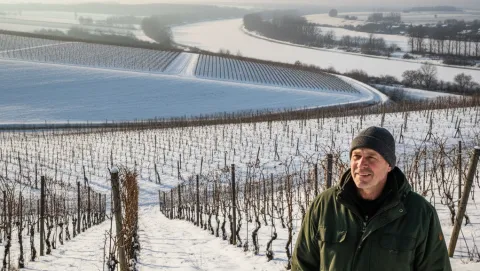
Viticulture in Brandenburg is small in scale but large in symbolism. Joachim Swillus, from an old winemaking family in the Palatinate, combines his profession as an architect in Berlin with an organic vineyard in Werder (Havel). He is one of seven professional winemakers in the region and the only one with organic certification. Historically, Brandenburg had vineyards in monasteries and at Schloss Sanssouci, but today the area covers only about 50 hectares, compared to 100,000 hectares nationally. Federal regulations prevent Brandenburg from being recognized as an independent quality region, placing it under Saale-Unstrut. Swillus therefore chooses the “Landwein” classification to emphasize his regional identity. Climate change offers opportunities through more sunshine, but droughts and pests, such as the spotted wing drosophila, set limits. His production amounts to around 15,000 bottles per year, mainly white varieties.
Our take
The article paints a romantic picture of regional revival but underrepresents structural tensions. The contrast between identity (“Brandenburg”) and classification (“Saale-Unstrut”) illustrates how regulations can constrain cultural expression. Climate optimism is rightly tempered by droughts and pests. Yet a deeper economic analysis of scalability and market position is missing.
About the author
Udo Badelt is a journalist at Der Tagesspiegel, writing on regional economy and agriculture. His approach is informative and strongly narrative, but tends toward human interest. Critical data analysis and structural interpretation are sometimes implicit.
About the publisher
Der Tagesspiegel is an influential Berlin newspaper (founded 1945) with a liberal orientation. It combines regional focus with national topics. Reporting is usually solid but often emphasizes urban perspectives and cultural narratives over macroeconomic analysis.